

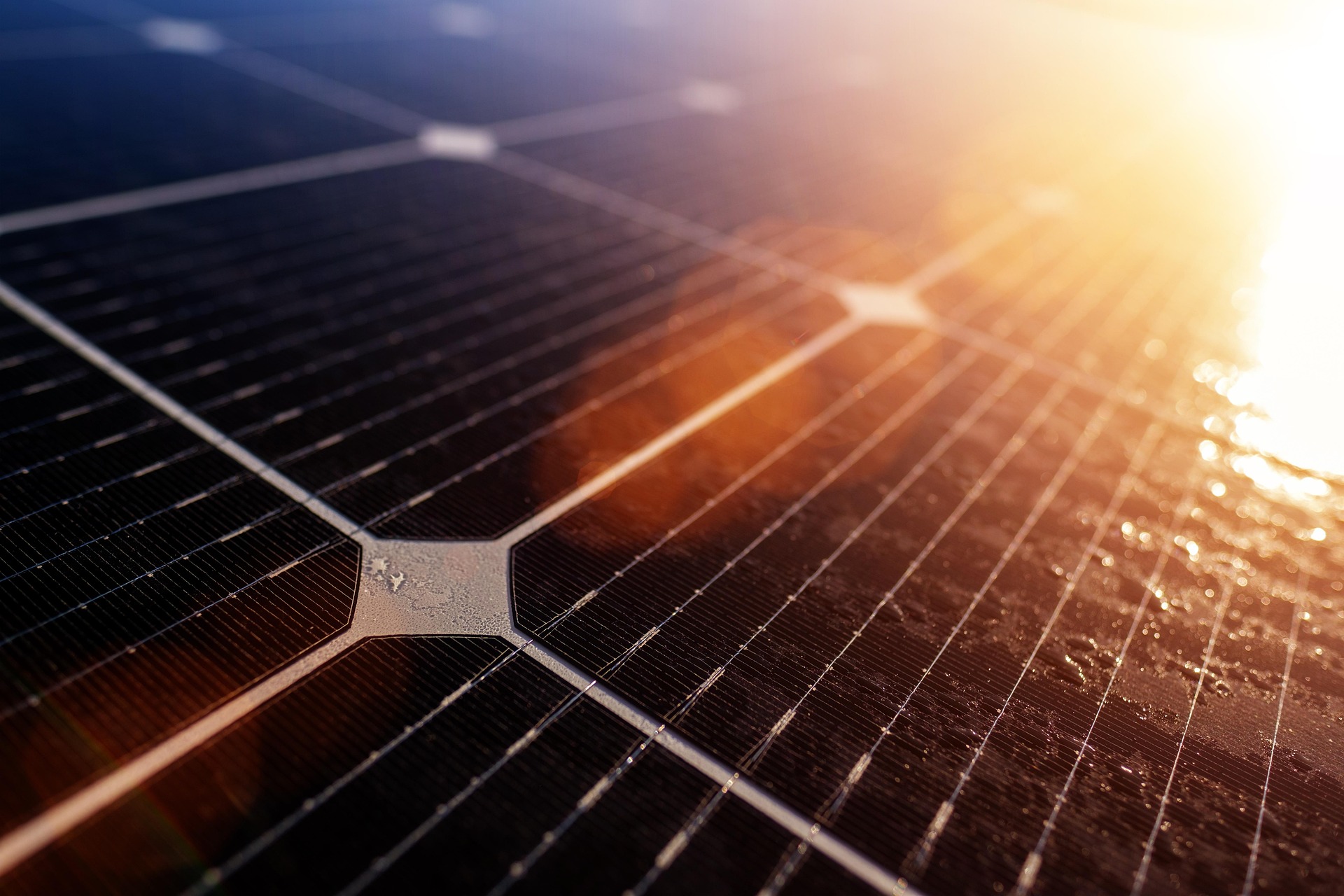
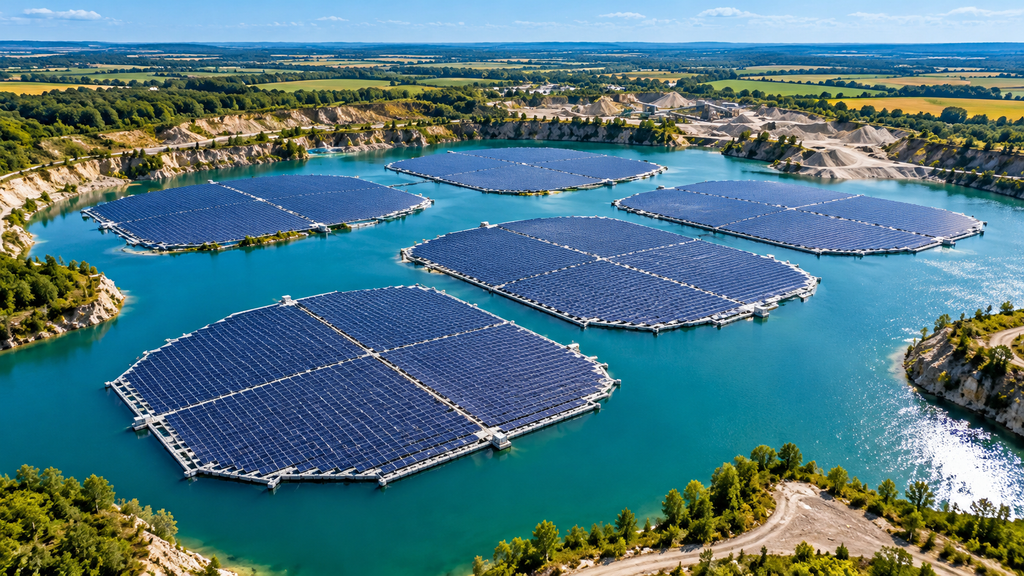
What happens when a Quarry has depleted its resources? Perthes, France, has done the impossible with a surprisingly clever solution. Six giant floating solar islands now cover the water, and the former industrial site has now become a large renewable energy project. This is no small solar installation. 135,000 Solar panels now sit on the water, forming a magnificently large power plant.
From quarry to floating solar power farm
The story starts with a reworked and overused tired landscape. In the former quarry gravel extraction area of Perthes, in France, the pits flooded after extraction ended. The land that had given up all it had to offer. The Les Ilots Blandin project preserved land use for a traditional solar farm, but instead, the enormous surface was waiting to be re-incarnated, and an existing water surface transformed into six floating solar islands
Here is the problem putting thousands of solar panels on water, water moves and is not as stable as land. Q ENERGY, Ciel & Terre and Velto Renewables created one of the largest floating solar projects in Europe. This approach is interesting, the solar panels aren’t just dumped on a giant raft and left to drift. The islands need to be stabilised in changing weather, which requires a carefully designed anchoring system.
A lot of clever solar hydro engineering.
What happens beneath the water is even more remarkable than the impressive site above the the water. The six floating islands have multiple photovoltaic panels that contribute to a total capacity and transform the former quarry into a significant producer of renewable electricity. Floating structures are cleverly engineered to be anchored and still movable. This allows the solar islands to stay above the water surface while adapting to changes in water levels and environmental conditions.
This major European floating solar power plant was the masterpiece of the company Ciel & Terre. The Hydro technology is specifically designed for solar panels floating on water, which means that any existing body of water becomes a potential site for renewable energy generation. Instead of asking, “Where can we find enough land?” this groundbreaking technology asks a very different question: “What if the land doesn’t need to be used at all?”
Why floating solar is gaining traction
The attraction is simple, the solar farm doesn’t have to compete for agricultural land. Other artificial water bodies such as reservoirs and former quarries can provide large open surfaces without competing directly with agricultural land or needing another area of land to be developed. There might be other potential benefits too. Water-mounted panels may operate differently than land-mounted ones, and the water itself offers a ready-made surface for large-scale installations.
At Perthes, the team has taken the idea further and the transformation complete. In effect, a tired gravel quarry has been revitalised and turned into an operating renewable-energy site which will additionally contribute to the decrease the amount of CO₂ emissions each year.
A second life for an old landscape
The Les Ilots Blandin project is a remarkable example of how to incorporate renewable energy into sites with an already strong industrial past. Now six floating solar islands are in place on water opened up by gravel extraction, with more than 135,000 panels working together to generate electricity. It’s an unusual sight, but that might be what makes the project so interesting. The next generation of solar farms may not require another field, or piece of countryside. Sometimes, the space is already there waiting for a new purpose, floating on water.

Leave a Reply