A meme surfaced recently showing a smiling woman with a nose ring, overlaid with the words: “Dear Ladies, Men Don’t Like This.” It’s the kind of post that tries to pass off a personal preference as a universal truth, using a woman’s appearance as a punchline.
What followed was a heated Facebook thread filled with unsolicited opinions, some thoughtful, some defensive, and others just mean-spirited. I found myself stepping in not because I wear a nose ring (I don’t), but because this kind of commentary highlights something more damaging than it may appear at first glance: internalised misogyny and the entitlement some feel to police women’s appearances.
Let’s unpack it.
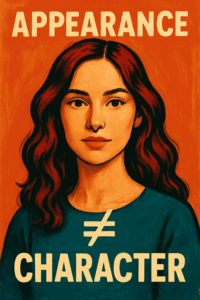
Appearance ≠ Character
It’s 2025, and somehow we still need to remind grown adults that someone’s appearance doesn’t define their worth, intellect, or values. Women don’t exist to be visually pleasing to men. We don’t dress for men, choose hairstyles or piercings for male approval, or spend time curating our appearance based on outside opinions. We do it for ourselves.
The meme, and the defensive comments that followed, reveal something deeper: a belief that women should still care what men think about their looks, and worse, that we should conform accordingly.
Internalised Misogyny: When Women Join the Policing
One of the most disappointing parts of the thread wasn’t the men voicing outdated views; it was the women who chimed in with ridicule. Comments like “How does she even pick her nose?” seem light-hearted on the surface, but they reinforce the same body-shaming culture women have fought against for decades.
This is what we call internalised misogyny: when women absorb and repeat sexist ideas, often as jokes or jabs, because it feels easier or safer than challenging them. It’s a defence mechanism rooted in a system that teaches us to compete with each other for approval rather than support one another in authenticity.
“It’s Just an Opinion”, But Is It?
Yes, everyone’s entitled to their opinion. But not every opinion needs to be shared, especially when it’s about someone’s body, style, or self-expression. Saying “men don’t like this” is not a neutral statement. It’s a subtle way of suggesting that women’s choices are only valid if men like them. And that’s a problem.
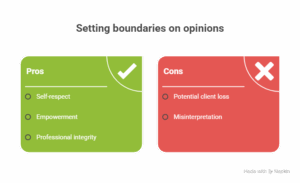
When I responded, “Women don’t care about men’s opinions of our appearance,” it wasn’t to be dismissive; it was to set a boundary. The idea that my worth as a woman or professional is tied to how palatable I am to male clients or commenters? That’s not the world I’m working toward. And if that boundary means losing a client who doesn’t respect it, I’m okay with that.
Let’s Focus on What Matters
Imagine if the same energy spent on dissecting nose rings or duck-face selfies was used to ask how someone treats others. Their values. Their integrity. Their goals. We’d be living in a kinder, more evolved world.
Until then, we’ll continue to call out outdated narratives and encourage women to show up as their fullest selves, with or without nose rings, green hair, piercings, tattoos, whatever they choose. Because true empowerment is not about fitting in, it’s about being free.
A Word from Frida
Frida Kahlo, an artist who defied convention and expressed her truth unapologetically, once said:
“I am my own muse, the subject I know best and the subject I want to better.”
Frida Kahlo
This quote isn’t just about art , it’s about ownership. About rejecting the idea that women must be defined by how others perceive them. Frida’s words remind us that self-expression is personal, political, and powerful. Whether through paint, piercings, or presence, we all have the right to shape our own stories ,no explanation required.
Bronwyn Marcus is the publishing editor of Unfold Durban Magazine and owner of the award-winning digital publication, which has received three industry awards. With over 15 years of experience in media and journalism, she is a prolific lifestyle writer, content creator, and Amazon Kindle author. Her work has appeared in publications and platforms including Inspired Women, Kingdom TV, Opera News Hub, Future Females, and the SAFREA Chronicle. Bronwyn is currently a SAFREA freelance journalist and is passionate about storytelling, digital media, travel, lifestyle, and community-focused content.



Leave a Reply